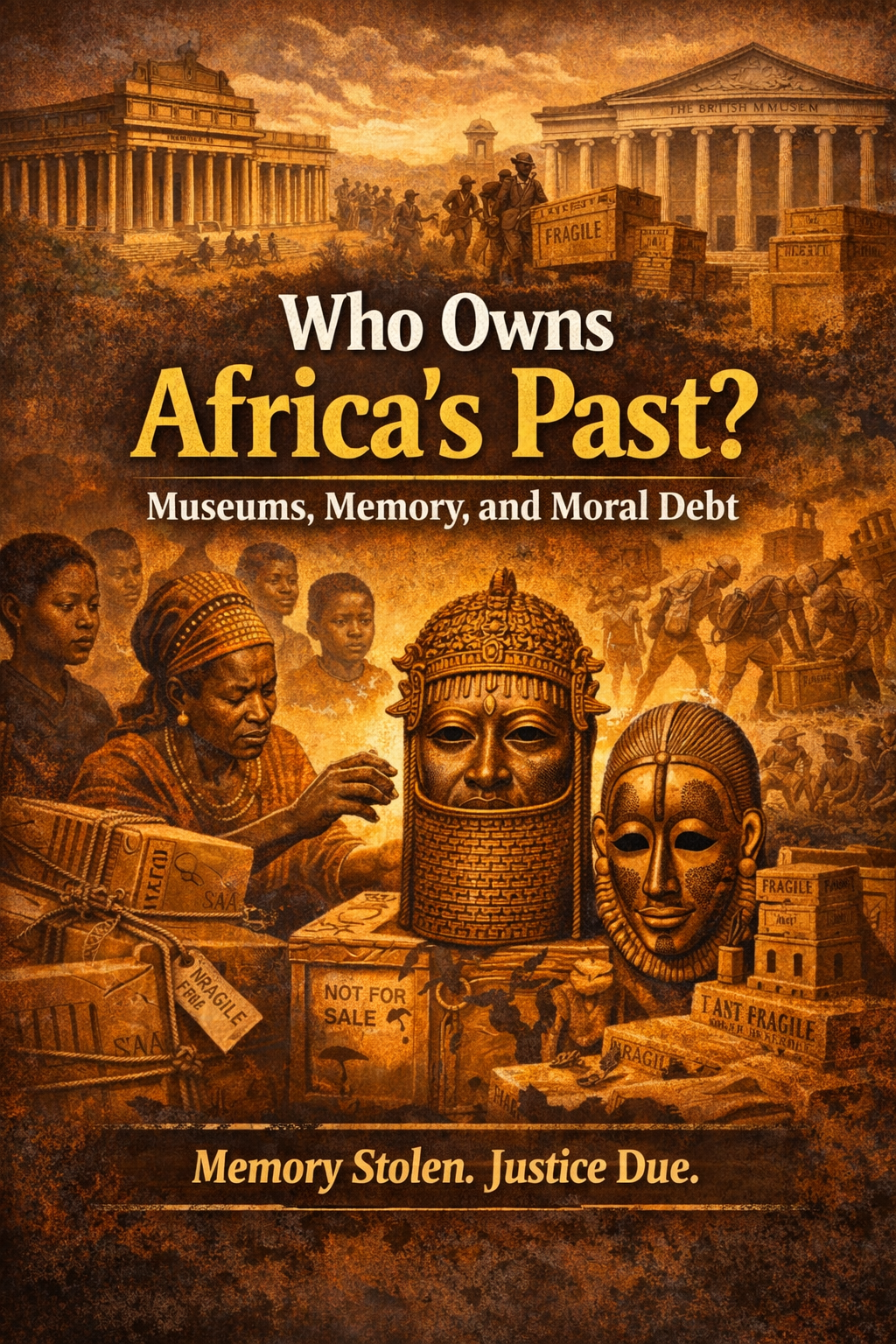

Who owns Africa’s past? Is it the glass cases of European museums, the catalogues of imperial expeditions, and the climate-controlled vaults of former empires? Or does ownership reside with the descendants of those whose worlds were looted, whose cosmologies were dismantled, and whose histories were interrupted by conquest and extraction?
This question is neither rhetorical nor nostalgic. It is urgent, political, and moral. It goes to the heart of how Africa is remembered, how knowledge is produced, and how justice is imagined in a postcolonial world that still profits from colonial spoils.
Across Europe and North America, African artefacts are displayed as “world heritage,” stripped of context and presented as trophies of discovery rather than evidence of dispossession. Masks that once mediated between the living and the ancestral now sit mute under halogen lights. Royal regalia seized during punitive expeditions is labelled as “ethnographic material.” Sacred objects are reduced to art objects. In these spaces, Africa’s past is aestheticized, depoliticised, and detached from the violence through which it was acquired.
Museums insist on custodianship. They speak of preservation, universal access, and scholarly stewardship. Yet custodianship without consent is simply possession by another name. The truth is uncomfortable: many of the world’s most prestigious museums are beneficiaries of war, theft, coercion, and grave robbery. Their collections are not neutral archives of human creativity; they are material records of empire.
Memory, however, does not live in museums alone. In Africa, history has always been held in bodies, rituals, landscapes, languages, and lineages. It lives in oral traditions, in song and ceremony, in the land itself. Colonialism did not merely remove objects; it sought to sever Africans from their systems of memory, to delegitimise indigenous knowledge, and to replace living histories with imperial narratives.
This is why the question of restitution is not simply about returning objects. It is about restoring memory. It is about acknowledging moral debt.
Moral debt cannot be measured in monetary terms alone. It is owed for the epistemic violence that declared African civilisations ahistorical. It is owed for the extraction of cultural capital that filled European institutions while African societies were left to rebuild from the ruins of conquest. It is owed for generations taught to encounter their own heritage only through foreign interpretation and authority. When African nations demand the return of artefacts, they are often asked whether they have the capacity to preserve them. This question reveals the enduring arrogance of empire. Capacity was never the issue when objects were violently removed. Nor is it a concern when African heritage generates revenue, prestige, and academic capital abroad. The subtext is clear: Africa is still imagined as a perpetual ward, incapable of owning its own past.
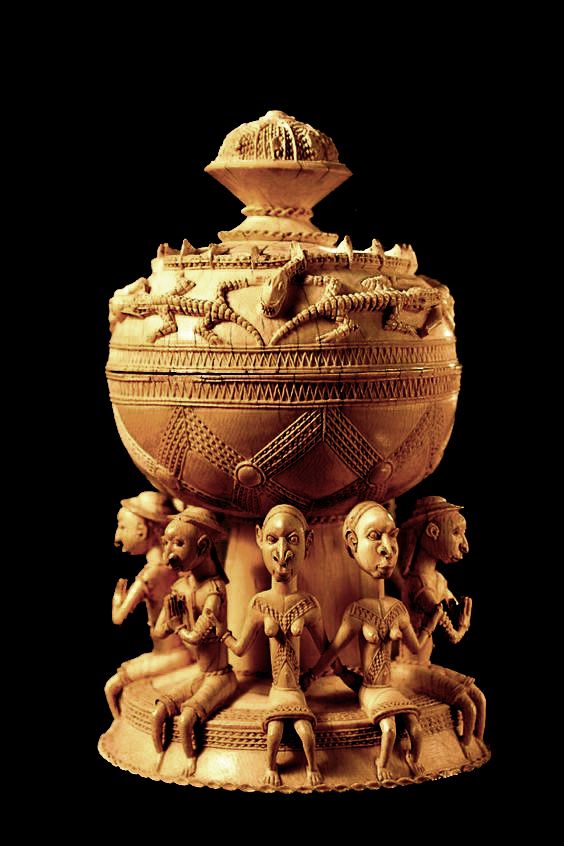
Yet ownership is not merely legal; it is moral and relational. To own Africa’s past is to be accountable to the communities from which it comes. It is to recognise that artefacts are not inert objects but living carriers of meaning, identity, and spiritual significance. It is to accept that no institution built on injustice can claim neutrality.
The global conversation on restitution has begun to shift, but it remains cautious, slow, and conditional. Select returns are framed as acts of generosity rather than obligations of justice. Temporary loans are offered in place of permanent restitution. The language of partnership is used to mask an unwillingness to relinquish control.
What is required instead is a fundamental reframing. Africa is not asking for favours. It is asserting rights. The right to narrate its own history. The right to steward its own heritage. The right to heal historical wounds that remain open precisely because the past has never been properly acknowledged.
Reclaiming Africa’s past is also about the future. How a people understands its history shapes its political imagination, its confidence, and its capacity to envision alternatives. A continent denied its past is easily denied its future. Conversely, a continent that reclaims its memory reclaims agency.
Museums, if they are to have any moral legitimacy in the twenty-first century, must move beyond possession toward repair. This means transparent provenance research, unconditional restitution, and genuine collaboration that centres African institutions and communities. It means telling the full story, including the violence, not as footnotes but as foundational truths.
Ultimately, Africa’s past belongs to Africa. Not because borders say so, but because memory, meaning, and moral authority cannot be permanently exiled. Objects may travel, but history remembers where they come from. The question, then, is no longer who owns Africa’s past. The question is whether the world is ready to confront the debt it owes, and whether it has the courage to let Africa come fully into possession of its own story.