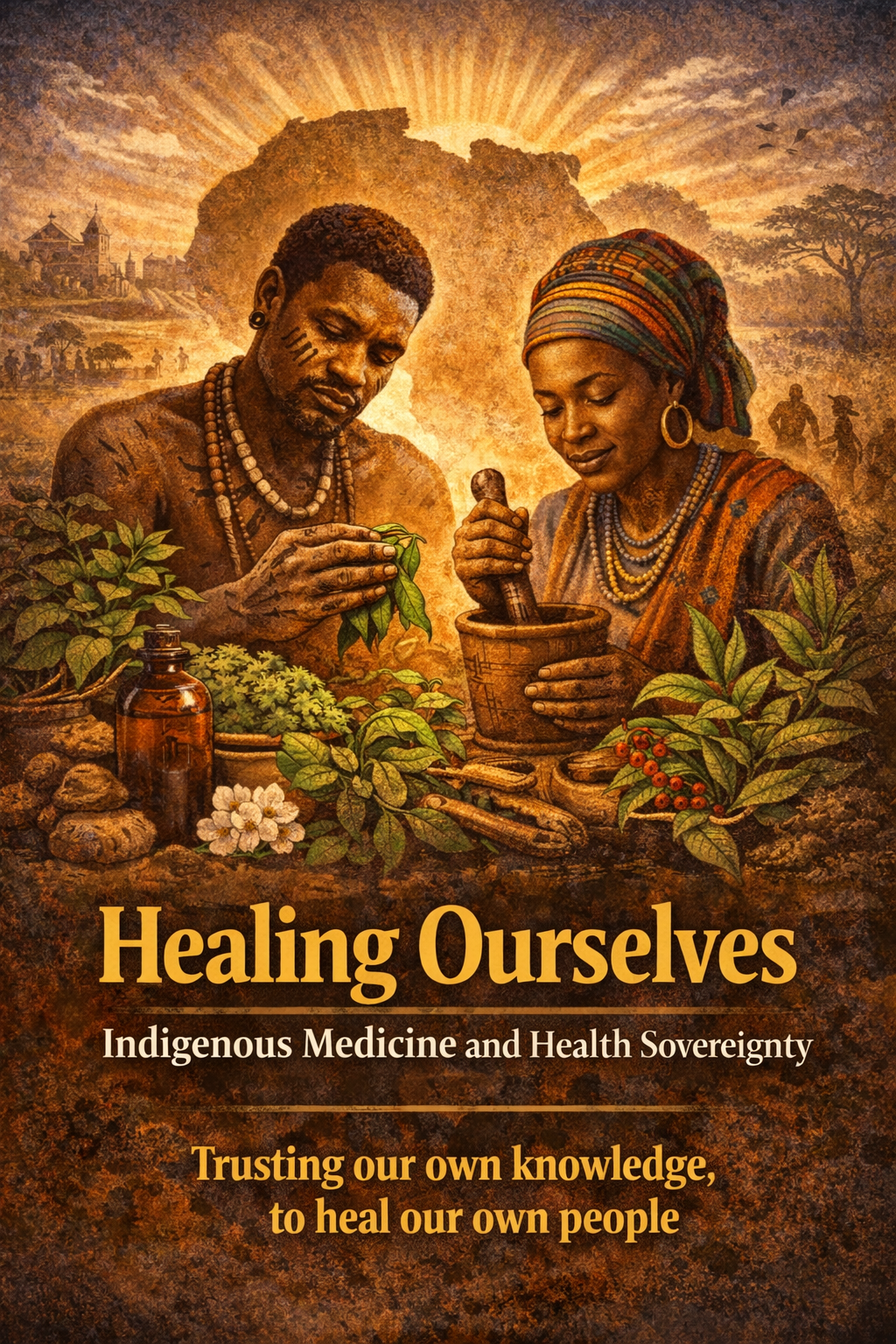

Africa’s health crisis is often framed as a shortage of hospitals, doctors, or pharmaceuticals. This framing is convenient, but incomplete. The deeper crisis is one of sovereignty, of who defines health, who controls healing systems, and whose knowledge is deemed legitimate.
For centuries, African societies healed themselves.
Long before colonial medicine arrived, communities across the continent had developed sophisticated systems of diagnosis, prevention, and treatment rooted in deep ecological knowledge. Healing was not isolated from daily life. It was integrated into diet, environment, spirituality, and community rhythms. Illness was understood not only as a biological malfunction, but as imbalance within the body, between the individual and the community, and between humans and their environment.
Colonialism did not simply introduce new medicine. It deliberately discredited existing systems.
African healers were criminalised, ridiculed, or regulated out of relevance. Indigenous pharmacopeia was dismissed as superstition, even as European researchers quietly extracted medicinal knowledge, plants, and compounds for laboratories abroad. Healing knowledge was separated from Africans, repackaged, patented, and sold back at a price.
The result is the paradox Africa faces today. A continent rich in medicinal biodiversity and therapeutic knowledge remains heavily dependent on imported drugs, many of which address chronic illnesses that are preventable or lifestyle related. Billions are spent annually on pharmaceuticals, while local healing systems remain marginalised, under researched, and under resourced.
Health sovereignty begins with recognition.
Indigenous medicine is not an alternative to African people. It is indigenous because it emerged from African realities, climates, diets, pathogens, and genetic diversity. It is adaptive, preventive, and holistic. Modern science increasingly validates what African systems have long practised. The centrality of gut health. The role of inflammation in chronic disease. The medicinal value of plants. The importance of lifestyle and environment in long term wellness.
Yet validation is often demanded only on external terms. African knowledge is required to prove itself through foreign frameworks, while imported medicine is assumed credible by default. This epistemic imbalance mirrors broader structures of dependency and must be dismantled if health systems are to be truly responsive to African needs.
Health sovereignty does not mean rejecting modern medicine. It means integration on equal terms.
Africa requires health systems that combine biomedical advances with indigenous knowledge, rather than subordinating the latter. This involves serious investment in research, documentation, standardisation, and ethical practice. It requires protecting biodiversity from biopiracy and ensuring that communities benefit from the knowledge they have preserved for generations.
Preventive care must become central rather than peripheral. Many of the diseases straining African health systems, including diabetes, hypertension, certain cancers, and autoimmune disorders, are linked to diet, environment, stress, and disconnection from traditional lifestyles. Indigenous medicine addresses these root causes, not merely symptoms.
The economic argument is equally compelling. Import dependent health systems drain foreign exchange and entrench vulnerability. By contrast, locally rooted medicine creates value chains in agriculture, research, manufacturing, and community healthcare. It keeps resources circulating within national economies and reduces long term healthcare costs.
There is also a dignity argument.
A people who cannot heal themselves are taught, implicitly, that their bodies require foreign solutions. This erodes confidence and perpetuates the notion that progress must always arrive from elsewhere. Health sovereignty restores agency. It affirms that African bodies are not defective, and African knowledge is not inferior.
Across the continent, there are promising examples of integration. Traditional medicine units within public hospitals. Herbal research institutes. Community based wellness models. Regulatory frameworks that recognise indigenous practitioners. Where leadership has chosen execution over rhetoric, outcomes have improved, including reduced healthcare costs, better community trust, and increased emphasis on prevention.
The challenge is scale and seriousness.
Health sovereignty will not be achieved through token recognition or cultural celebration alone. It requires policy alignment, budgetary commitment, scientific collaboration, and intellectual humility. It demands that African governments treat indigenous medicine not merely as heritage, but as strategic infrastructure.
Healing ourselves is not a nostalgic project. It is a pragmatic, future oriented strategy rooted in evidence, ecology, and economic sense. It is about building systems that are resilient, affordable, and culturally coherent.
Africa does not lack the means to heal its people. It lacks the political courage to trust its own knowledge fully.
Reclaiming health sovereignty is an act of self-respect. It signals a continent ready to take responsibility for the wellbeing of its people, drawing on the best of global science while standing firmly on the ground of its own wisdom.
To heal ourselves is not to turn inward in fear.
It is to stand upright in confidence.